The rustle of leaves. The warmth of the sun. The smell of pine and earth after a recent rain. For many, these simple experiences are easy to take for granted. But for people who utilize wheelchairs or have other mobility limitations, the outdoors is often out of bounds.
That is beginning to change. Across the country, some parks, nature preserves and recreation areas are developing adaptive hiking programs that allow people with disabilities to experience nature—with the first one in California launched in January 2026 at Stough Canyon Nature Center in Burbank.
Providing off-road wheelchairs free of charge for a two-hour outing, the 14-acre trailhead nestled in the Verdugo Mountains is a gateway to one of the L.A. area’s most-popular and extensive hiking networks—with panoramic views of the San Fernando Valley, downtown Los Angeles, Glendale and the surrounding foothills.
Everyone Belongs Outdoors
With a motto of Everyone Belongs Outdoors, the non-profit Accessible Off Road (AOR)—which launched the Stough Canyon pilot program—was founded by Southern California-resident Austin Nicassio, who began using a wheelchair as an adult due to the devastating after-effects of a neuro-immune viral infection.
“I was able bodied for 27 years,” Austin says. “My whole life was outdoors. I was mountain biking on weekends, hiking national parks, surfing before work—I took it for granted. Losing access to the outdoors was really hard. My mental health suffered.”
After a lengthy recovery, he began to experiment with adaptive mobility devices, soon realizing that all-terrain wheelchairs were the only option that allowed him to once again truly experience the joys of hiking not limited to the occasional paved trail.
However, priced at $20,000 each, which is not covered by insurance, the chairs were out of reach for most people with a disability. Even paved trails—the current standard for accessible hiking—are expensive, costing upwards of $100,000 per mile. Barriers that inspired him to launch AOR.
“My mental health is a lot better now,” he shared, “which got me into the mind set of helping others. This project has been therapy in itself to take people out to create these memories for them. It makes me feel like this was all meant to be.”
Hitting the Trail
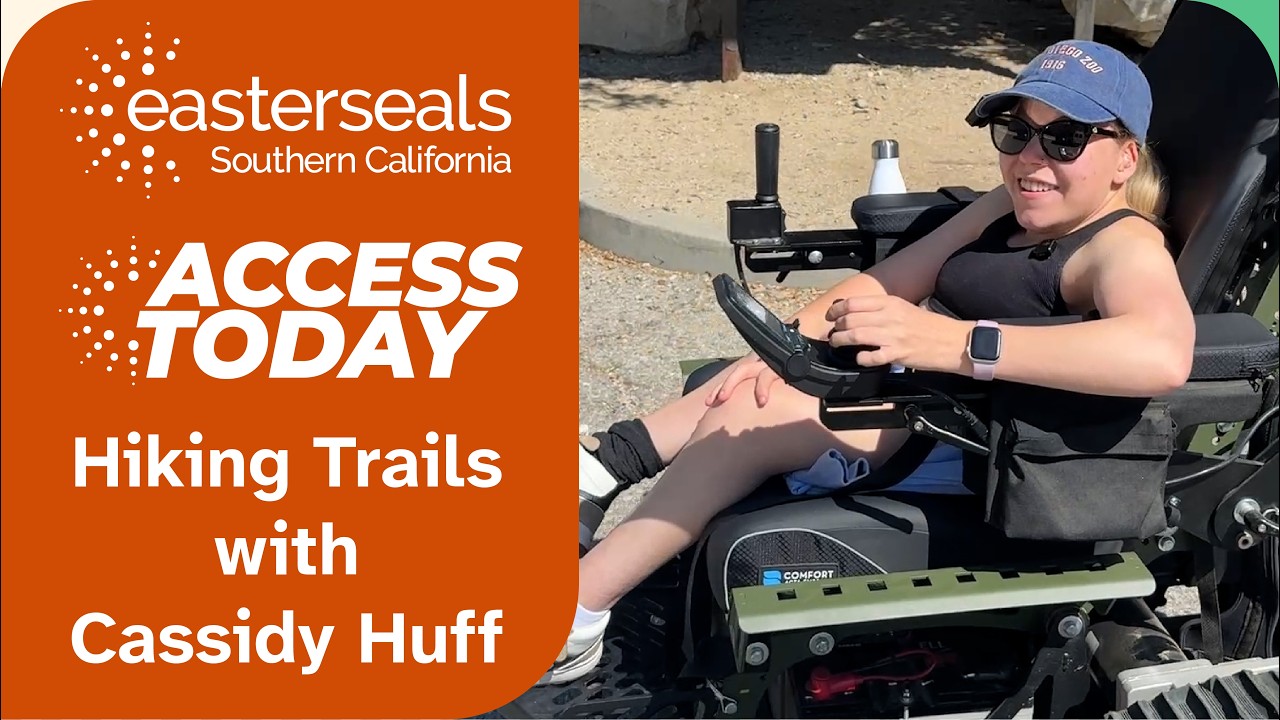
“I’ve never been hiking before,” said Cassidy Huff, a disability rights advocate and little person with mobility limitations and chronic pain, who recently tried out an off-road wheelchair at Stough Canyon. “People just walk up this hill?” she laughed. “It’s not a hill, it’s a mountain!”
Said Austin, “If you were to ask any able-bodied person what their favorite hike is, it’s never going to be the paved ones because you don’t get the same sounds, smells and sights or the same immersion. We knew AOR needed to exist so that everyone, independent of income or ability, can go experience nature as we’re all intended to be.”
“It gave me a new sense of freedom, autonomy and independence,” reported Cassidy enthusiastically, following the hike. “It was comfortable and I definitely could not have done this walking or in my regular chair. The views were crazy. Really cool. It was a lot of fun! I really love being out in nature. I would 100% do it again!”
Nature Without Limits
Cassidy isn’t the only fan and the response to the Stough Canyon pilot program has been overwhelmingly positive. “It’s been nothing short of phenomenal,” Austin says. “The chairs are booked out weeks in advance. People are coming from other counties, like San Diego, and from out of state. It’s been nothing short of life-changing for people.”
But he is quick to point out that the state of California has more than 2 million mobility-limited residents, far more than any other state, and that there are only about 100 off-terrain wheelchairs available across the entire country, primarily through non-profits.
“Burbank is leading the way with the first adaptive wheelchair program in California,” he said, “and has proven that jurisdictions like cities, counties, states and national parks are ready to take ownership of these chairs and operate programs. That’s the only way we are going to be able to scale to meet the demand.
“Our long-term vision is a statewide network of accessible outdoor experiences,” he continued, noting that he now has interest from Orange County and Santa Cruz in establishing similar pilot programs. “Whether its trails or beaches, we want to be able to visit any major park or trail in California and experience the outdoors.”